
Kushta costus root benefits uses

What are the benefits of Kustha Costus root?
(
For thousands of years, Ayurveda has turned to nature for healing—and some of its most powerful remedies come from roots hidden deep in the earth. Among these, Kushta (Saussurea costus), also known as costus root, holds a special place due to its wide range of healing properties and well-known Costus root benefits. Valued in classical Ayurvedic texts, this herb is used to support healthy skin, ease respiratory issues, and improve digestion. Its warm and potent nature helps balance doshas and promote overall wellness. In this blog, we’ll explore why Kushta root continues to be trusted as a natural remedy even today.
Names of Kustha costus root in different languages
- Latin Name: Saussurea lappa
Vernacular Names: - Hindi: Kuth
- Bengali: Kood
- Tamil: Kostham, Goshtam
- Telugu: Changaluva-Kosthu, Kustham
- Marathi: Kiriath
- Gujarati: Kudu Upalet
- Malayalam : Kottam,Seyaddi
- Kannada : Koshta
- English : Costus Root
Sanskrit Names :
Utpala – grows in moist places
Kashmira – grows in Kashmir,
Vapya – Found near water resources
paribhavya – It is effective in many disorders
Gada, Agada, Ama, Amaya, Kapalam, Kouderam, Japyam, Tvakdosa, Divya, Durnama, Padmaka, Paribhadraka, Mansanjnaka, Ramam, Ruk, Rogahva.
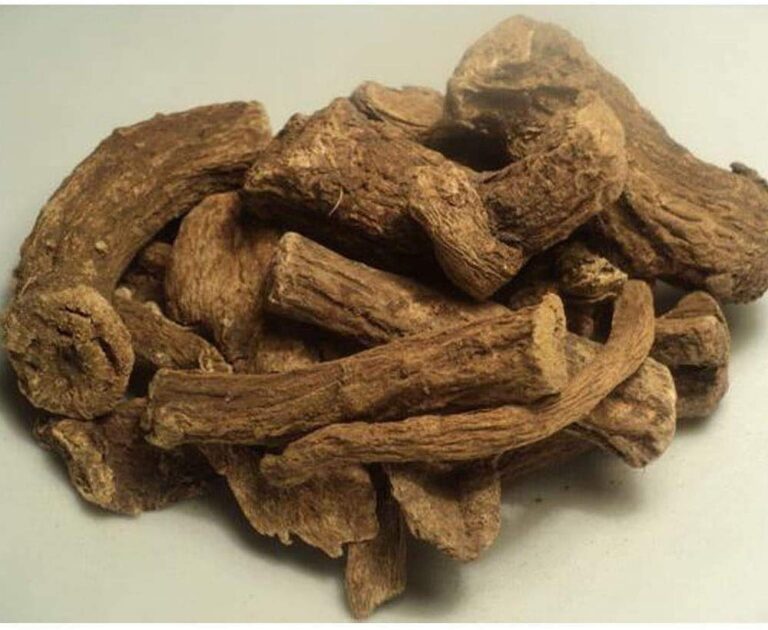
Ayurvedic properties & Benefits of Costus root ( Kushtha) powder
Ras ( Taste)
- Tikth ( Bitter)
- Katu ( Pungent)
- Madhur( Sweet)
Veerya ( Potency)
- Ushna (Hot)
Vipaak ( Post-digestive effect)
- Katu (Pungent)
Guna ( Qualities)
- Laghu (Lightness)
- Ruksha (Dry)
- Teekshna ( reaches deep tissue)
Parts Used : Root
Also read Basics of Ayurveda: Learn about Vata, Pitta, Kapha
Dosha Effect
Reduces Kapha and Vata
Because of its bitter taste and hot potency, Kushta is especially useful for conditions caused by excess kapha and Madhur ras helps in Vata balancing..
Classical Categorization
Charaka Samhita–
Sukrasodhana – group of herbs that cleanse semen, corrects sperm morphology
Lekhaniya – group of herbs that have scraping, fat reducing activity
Asthapanopaga – group of herbs used in Basti treatment.
Sushruta and Vagbhata – Eladi Gana
Bhav Prakash Nighantu– Haritakyadi varga
Health Benefits of Costus Root
1. Supports Digestive health
Kustha helps kindles the digestive fire (Agni) due to its hot potency ( Ushna Virya) . This property helps in improving digestion, reducing ama , and give relief in issues like bloating and gas.
2. Boost Respiratory health
Kusth's ability to balance Kapha dosha makes it valuable for respiratory health. It helps clear excess mucous from respiratory tract making it beneficial for conditions like asthma, bronchitis and cough.
3. Reduces Inflammation
It is having anti-inflammatory nature makes it useful for managing inflammatory conditions such as arthritis and joint pain. It can provide relief from pain and discomfort associated with these conditions.
4. Beneficial for Skin Problems
Its anti inflammatory and detoxying properties may help manage skin conditions like eczema, psoriasis and allergic skin rashes.
5. Detoxification
Because of its bitter taste and detoxying properties kushta can help cleanze the body by eleminating toxins and promoting health liver function.
Actions (Karma) of Kushta Costus root in Ayurveda
Shukrala – increases sperm count
Vatasrahara – useful in gout treatment
Visarpa – useful in herpes
Kasahara – relieves cough, cold
Kushtahara – useful in skin diseases
Shwasahara – useful in asthma, COPD and other respiratory diseases
Hikkahara – relieves hiccups
Jwarahara – useful in fever
It is used in the treatment of epilepsy
It is hepato-protective (protects liver against degeneration)
It is a good antiviral herb
The oil extracted from Costus root is also used for anti-inflammatory and pain relieving purposes.
It helps to lower blood pressure.
How to use Kushta ( Costus Root)
Kushta is available in different forms. The choice depends on the condition and convenience.
1. Kushta Powder
It is often available in powdered form. To use it you can mix Kushta powder with honey or warm water depending upon the health condition for which you are using this herb.
Dosage : 1 to 2 grams two times a day or as advised by Ayurvedic doctor.
2. Kushta Decoction ( Kadha)
Prepare the decoction using Kushta root. Take small Kushta root of about 3 to 5 cm in length. Add this root in 2 cup water and then boil it, till water is reduced to half of its original volume. Strain the liquid and consume the decoction. The decoction is beneficial for various health problems.
Dosage : 15 to 20 ml two times a day or as advised by Ayurvedic doctor.
3. Topical Application :
It is used for external application to manage various skin problems. For external application make paste of kustha powder by adding water or carier oil like coconut oil. Apply this paste on the affected area of the skin. This helps in relieving itching, burning sensation and redness of the affected part.
What are the side effects of Kushta
Like any other Ayurvedic herb costus root is having many health benefits . However , it may have some side effects as well. They include
If someone is sensitive to kushta they may see skin rashes or redness and itching. In this condition it is advisable to discontinue the use .
It may also increase Vata dosha in the body and therefore increase problems like joint pain.
Kushta may reduce blood glucose level in the body.
Precaution
During breast feeding avoid consuming Kushta.
Avoid consuming Kushta during pregnancy due to lack of research on safety during pregnancy.
Always use Kushta in recommended dosage to avoid potential side effects such as nausea and bloating. It is better to ask Ayurveda doctor about dose and suitability for your body type.
If you have pre existing medical conditions or taking any medications, consult a doctor before using Kushta. This ensures that there are no harmful interactions or contraindications.
Don’t use Kushta continuosly for long period of time . Take break to allow your body to respond appropriately. Also when we use any herb continuosly ,then the body becomes use to it and it don’t respond to it.
Store Kushta in cool and dark place to maintain its potency and prevent it from contamination. Proper storage helps in retaining its therapeutic value.
Research
Research articles related to Costus root:
Anti inflammatory activities : Extensive research has highlighted the medicinal potential of S. costus, particularly its anti-inflammatory properties. Various laboratory and animal studies have demonstrated this phenomenon.According to Mammate et al. [43], S. costus has various pharmacological properties, including anti-ulcer, anti-cancer, hepatoprotective, and anti-inflammatory effects. These results were consistent with the traditional medicinal uses of these plants. The antimicrobial activity of the plant against pathogens such as Candida, herpes, and SARS-CoV-2 further underscores its therapeutic versatility [55]. S. costus is a versatile medicinal plant with numerous health benefits.
Hepato protective action: The hepatoprotective effects of S. costus root extracts have been previously reported. This extract consists of sesquiterpene lactones, which have a range of pharmacological effects including hepatoprotection [73]. Research indicates that S. costus may exhibit powerful hepatoprotective properties by regulating the expression of cellular cytokines and miRNAs [65]. According to various reports, the antioxidant activity of root extracts can contribute to their hepatoprotective effects [12]. The effectiveness of S. costus in preventing liver damage has been examined in various induced liver toxicities, and the outcomes have shown its potential as an anti-hepatotoxic agent has been demonstrated.
Conclusion
Kushta root stands as a powerful example of Ayurveda’s deep connection with nature and holistic healing. Its ability to support skin health, respiratory function, and digestion makes it a versatile herb in traditional wellness practices. Even in today’s fast-paced world, such natural remedies offer gentle yet effective support for the body. However, like all Ayurvedic herbs, Kushta should be used with care and proper guidance. If you’re considering adding it to your routine, consulting an Ayurvedic expert can help you get the best results. Embracing herbs like Kushta is not just about treatment—it’s about moving toward a more balanced and mindful way of living.