
Karanja benefits in Ayurveda, uses, remedies

What are the benefits of Karanja?
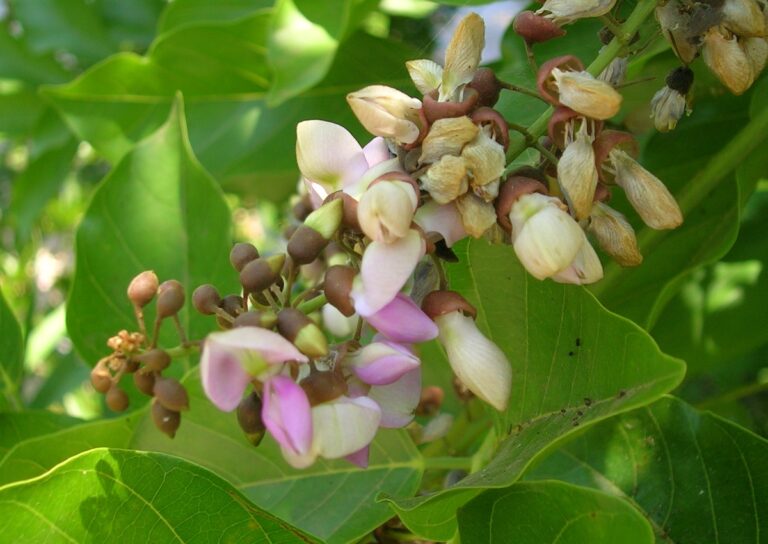
Ayurveda has used powerful medicinal herbs for thousands of years to support natural healing. One such herb is Karanja (Pongamia pinnata). Known for its strong detoxifying and skin-healing properties, this plant holds an important place in traditional medicine.
In this complete guide, we will explore karanja benefits, its Ayurvedic properties, vernacular names, uses, and important precautions you should know before using it.
Names of Karanja in different languages
- Latin Name: Pongamia pinnata
Vernacular Names: Hindi: Karanj
English: Indian Beech, Pongam Tree
Tamil: Pungai
Telugu: Kanuga
Malayalam: Pungu
Kannada: Honge
Marathi: Karanj
Sanskrit Names :
Karanja – which colours water
Naktamala – looks good at night
Udakirya – Flowers are seen scattered on water during winter
Gucchapushpaka – flowers appear in bundles
Ghritapoora – seeds yield thick oil which looks similar to ghee.
Snigdhapatra – leaves are shining, oily.
Ayurvedic properties of Kalmegh powder
Ras ( Taste)
- Tikth ( Bitter)
- Katu (Pungent)
- Kashay (Astringent)
Veerya ( Potency)
- Ushna (Hot)
Vipaak ( Post-digestive effect)
- Katu (Pungent)
Guna ( Qualities)
- Laghu (Lightness)
- Teekshna (Sharp)
Also read Basics of Ayurveda: Learn about Vata, Pitta, Kapha
Dosha Effect
Reduces Vata and Kapha
Can increase Pitta if taken in excess
Because of its heating nature, Karanja is mainly used in Kapha and Vata-related disorders.
Health Benefits of Karanja
Now let’s explore the most important karanja benefits in detail.
1. Karanja benefits for Skin Health
One of the most well-known karanja benefits is its effect on skin disorders. Because of its bitter( tikth ras) taste and astringent( kashay ras) taste it is very beneficial in
Helps manage eczema
Supports treatment of psoriasis
Useful in fungal infections
Helps reduce itching and irritation
Karanja oil contains antimicrobial compounds that help fight bacteria and fungi. Its bitter and pungent nature helps cleanse toxins from the skin.
It is commonly used in Ayurvedic oils and ointments for chronic skin problems.
2. Supports wound healing
Karanja has natural antiseptic properties.
Promotes faster wound healing
Helps prevent infection
Reduces inflammation around wounds
Traditionally, crushed leaves were applied to minor wounds to speed up recovery.
3. Anti- inflammatory benefits
Another important karanja benefit is its anti-inflammatory action.
It may help in:
Joint pain
Swelling
Inflammatory skin conditions
Its Ushna (heating) nature improves circulation and reduces stiffness, especially in Vata-related joint issues.
4. Beneficial for Hairs and scalp
Karanja oil benefits extend to scalp and hair care.
Helps reduce dandruff
Supports scalp infection control
May reduce itching
Nourishes dry scalp
It is often mixed with coconut oil before applying to the scalp to reduce its intensity.
5. Antimicrobial and Antifungal effect
Modern research suggests that Pongamia pinnata contains bioactive compounds with antimicrobial effects.
This makes it useful in:
Fungal infections
Minor bacterial infections
Skin eruptions
These properties explain why Karanja is commonly used in herbal skin formulations.
Actions (Karma) of Karanja in Ayurveda
Yonidoshahrut – detoxifies vaginal diseases, useful in uterine disorders.
Kushtaghna – useful in skin diseases
Udavartahara – relieves bloating
Gulmahara – relieves abdominal tumour, bloating
Arshahara – Useful in piles / haemorrhoids
Vranahara – helps in quick wound healing
Krumihara – relieves worm infestation
How to use Karanja
Karanja is available in different forms. The choice depends on the condition and convenience.
1. Karanja Oil
It is the most commonly used form of this herb
Applied externally for skin disorders
Used in scalp treatments
Added to medicated oils
Always dilute before applying to sensitive skin.
2. Karanja decoction
- Prepared from bark or leaves in traditional practices.
- This is rarely self-administered and must be guided by an Ayurvedic practitioner.
What are the side effects of Karanja ?
Like any other Ayurvedic herb karanja is having many health benefits . However , it may have some side effects as well They include
Allergic Rashes
If someone is sensitive to karanja they may see skin rashes or redness and itching. In this condition it is advisable to discontinue the use .
It may also increase Pitta dosha in the body and therefore may cause irritation in people with high Pitta.
Karanja may reduce blood glucose level in the body.
Caution :
Internal Use Requires Supervision
Karanja is not a mild herb.
Incorrect dosage may cause digestive irritation
Should only be taken internally under Ayurvedic guidance
Precaution
During breast feeding avoid consuming Karanja.
Avoid consuming Karanja during pregnancy due to lack of research on safety during pregnancy.
Always use Karanja in recommended dosage to avoid potential side effects such as nausea and bloating. It is better to ask Ayurveda doctor about dose and suitability for your body type.
If you have pre existing medical conditions or taking any medications, consult a doctor before using Karanja. This ensures that there are no harmful interactions or contraindications.
Don’t use Karanja continuosly for long period of time . Take break to allow your body to respond appropriately. Also when we use any herb continuosly ,then the body becomes use to it and it don’t respond to it.
Store Karanja in cool and dark place to maintain its potency and prevent it from contamination. Proper storage helps in retaining its therapeutic value.
Home Remedies
For Skin Ithching : Take Karanja oil and add little camphor ( Kapoor) to it and mix it well. Apply it on the affected part . This remedy helps in relieving itching, dryness of skin.
In Eczema & Psoriasis : Take 5ml neem oil and mix it with 5 ml karanj oil. Apply this oil on the skin that is affected. This helps in healing the skin.
Ayurvedic medicines that contains Karanja
Karanja Taila - used in herpes, boils, abscess, pigmentation and eczema
Murivenna - Used for quick wound healing and to relieve pain and inflammation.
Vilwadi Gulika -used in scorpion bite, fever, toxic and psychological conditions.
Mahamanjishtadi kwath -Used in gout, syphilis etc.
Research
Research articles related Pongamia pinnata:
Anti- bacterial activity: Crude decoction of dried leaves of Pongamia pinnata was evaluated for its antimicrobial (antibacterial, antigiardial and antirotaviral) effect; and its effect on production and action of enterotoxins (cholera toxin, CT; Escherichia coli labile toxin, LT; and E. coli stable toxin, ST); and adherence of enteropathogenic E. coli and invasion of enteroinvasive E. coli and Shigella flexneri to epithelial cells. The decoction had no antibacterial, antigiardial and antirotaviral activity, but reduced production of CT and bacterial invasion to epithelial cells. The observed results indicated that the crude decoction of P. pinnata has selective antidiarrheal action with efficacy against cholera and enteroinvasive bacterial strains causing bloody diarrheal episodes.
Conclusion
Karanja (Pongamia pinnata) is a powerful Ayurvedic herb known for its skin-healing, antimicrobial, anti-inflammatory, and detoxifying properties. The wide range of karanja benefits makes it especially valuable for managing skin disorders, scalp problems, and Kapha-related conditions.
However, due to its strong and heating nature, it must be used carefully and preferably under expert supervision.
If used correctly, Karanja can be a highly effective natural remedy in your Ayurvedic wellness routine.